Make Sure You FLOSS
Well, I suppose I’ve spoiled the ending with my title. But I want to talk about how my opinions on software have changed. I’ve been a “techie” for as long as I can remember, but over the past few years tech has been making me grumpy.
The Beginnings
I remember a story from 2009 about Amazon pulling copies of, believe it or not, 1984 and Animal Farm from people’s Kindles. There is some nuance: apparently the seller didn’t actually hold the copyright to the books. But it showed the world the Brave New World we were entering. People had paid for those books and thought they owned them, but what they owned was a license that Amazon could revoke at any time. People no longer own things; corporations own them, and we just pay for a long-term rental.
That bothered me, but it was something Amazon did, and I wasn’t a Kindle user. At the time I still mostly bought DVDs, and any music I bought on iTunes I could burn to an audio CD if I wanted a physical, non-revocable copy. But time passed, as it tends to do. Internet speeds got faster, a 17GB HD film stopped seeming so crazy, and I bought more and more digital movies. Eventually I did get a Kindle, because Amazon subsidized it and it was cheap enough. Now I pay money for media I don’t own, and it makes me grumpy.
Games too
Nintendo is getting in on this too. Under the Switch 2 User Agreement, you own the hardware, but the software on it is merely licensed. If you do something Nintendo doesn’t approve of, like using a legal backup of a game you own, they can disable your account and your access to Nintendo’s software, essentially turning the Switch into a useless brick. They can do the same if you mod the hardware. So do you really own it at that point, or has “ownership” become meaningless legalese?
The only reason I pick on them (they’re all doing it) is that I’ve loved Nintendo since I was a little boy. Seeing them adopt this policy makes me grumpy.
The Walled Garden
I’ve been a dedicated Apple user for over a quarter of a century, and for years I have defended the App Store’s “walled garden.” With Apple as gatekeeper, things stay safe and “just work.” But lately App Store review seems far more focused on stopping developers from doing things Apple doesn’t approve of than on protecting users. There have been a few instances of nefarious apps making it through review. And predatory practices like weekly subscription pricing have become more and more common, especially in apps targeting children. I think the idea is that a child asks a parent to approve the purchase, and the parent doesn’t read the description closely enough to notice that the charge is weekly, not monthly. My son asked me for a custom keyboard app just last week (we’ll set aside the privacy implications of a possible/probable keylogger for the moment) that had a $10 weekly subscription. That’s $520 a year! Google and Android aren’t really any better. It makes me grumpy.
Planned Obsolescence
I’m not a conspiracy theorist who believes tech makers purposely design their devices to fail as soon as the warranty expires. That’s what many people mean by “planned obsolescence,” but it’s not what I mean. I mean the trend, started by Apple and picked up by just about everyone else, of making devices less and less user-repairable and user-upgradeable.
It used to be that if you ran out of space on your hard drive, you’d buy another drive, copy the data over, and swap it in. Or you’d pay someone like me to do it for you. Same with RAM: if you ran out of memory, you bought more, as long as your motherboard supported it. Now the trend toward everything being thin and sleek (which I agree looks beautiful) means storage and memory are soldered on. You have to choose your storage and memory for the entire life of the computer at the time of purchase. Manufacturers (and Wall Street) love this, because plenty of buyers think, “Sure, the baseline is fine for me today, but will it be in a year or two?” and then pay for more computer than they need. That’s especially egregious when you consider how many of those people will never use the extra capacity, but upgraded out of fear anyway.
Then there are the processor transitions. I don’t know that this is really anyone’s fault. Apple wasn’t getting the chips it needed from Intel in the timeframe it needed them, and the expertise it developed designing chips for the iPhone paid om ff: the M-series chips really are awesome. But the result is that the Intel hardware that is still plenty powerful and plenty capable, but is left behind without even security patches to keep it safe to run. This too makes me grumpy.
So What?
Isn’t that just the cost of progress? Isn’t that just the way things are? Is there really anything that can be done? Do you really think you can make a difference, or aren’t you better off getting over it so you’re not grumpy?
These are my thoughts as I work through these frustrations. But there is hope! In fact, there’s a whole community of grumps who don’t accept the status quo. They believe in ownership and in the freedom to use the devices they paid for. Who are these heroes and heroines? The open source community.
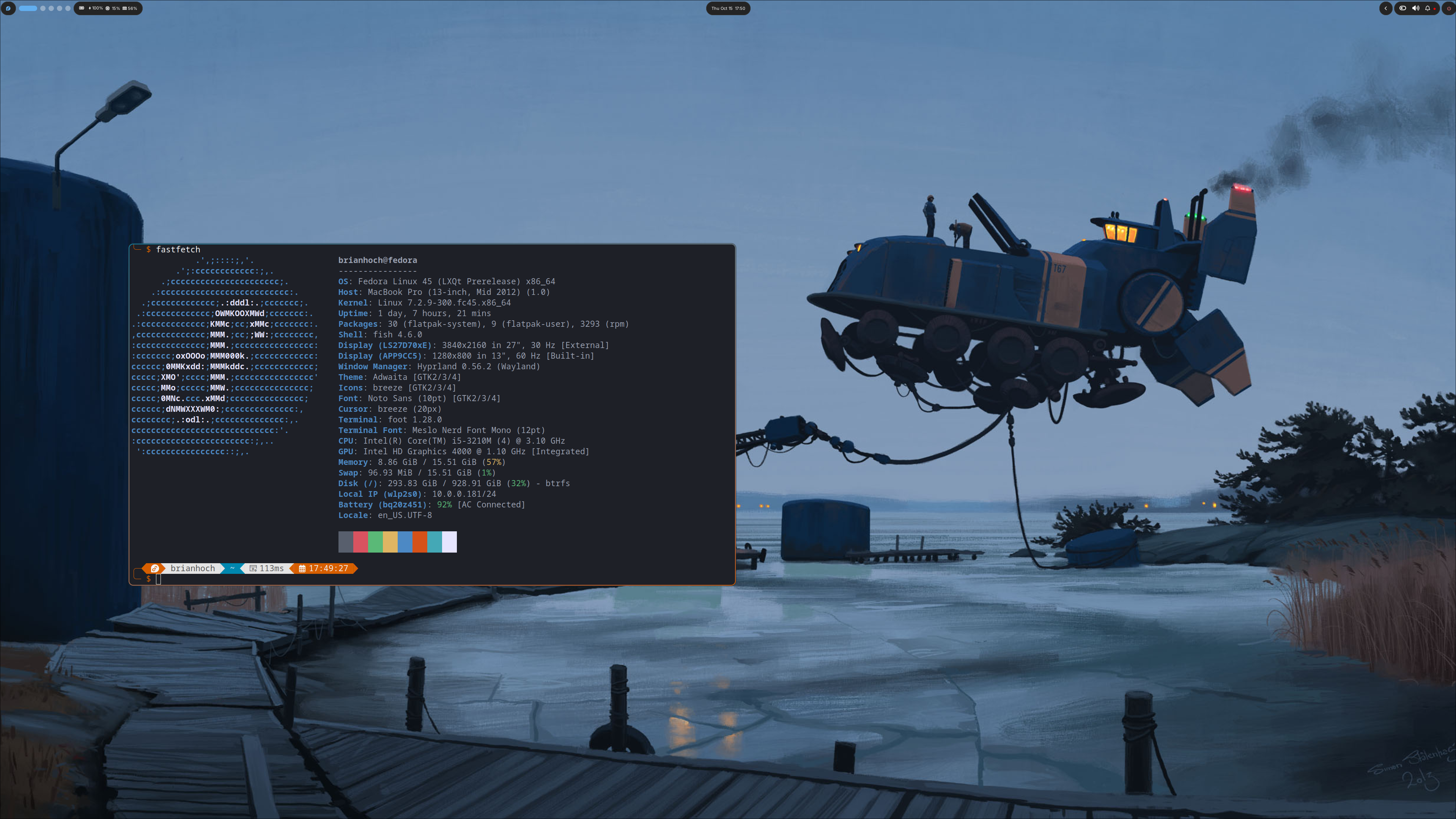
Start with open formats like Opus, FLAC, AV1, JPEG, JPEG XL, PDF, and EPUB, which let us store our files in ways we can own and control. Then there’s Free/Libre Open Source Software (FLOSS) like Linux, which can run on “obsolete” hardware. I’m writing this post on a 14-year-old Mac running pre-release Fedora. Apple stopped supporting this machine years ago, but it’s still happily chugging along at normal everyday computing tasks. Am I gaming on it or doing 3D renders? No, but that doesn’t mean it needs to be abandoned, creating more e-waste.
Hardware can be part of the answer too. Companies like Framework build (admittedly expensive) hardware meant to be repaired and upgraded throughout their lives, which is the opposite of soldered-on trend.
The same idea is reaching phones. There are some really cool projects that make Android, which is technically open source, truly FLOSS by removing Google’s services and tracking. LineageOS and GrapheneOS do just that. Google is making it harder, though, which could leave us with no truly free mobile operating system.
I don’t have a tidy conclusion, but I wanted to get these thoughts out. Tech makes me grumpy. FLOSS makes me a little less so.